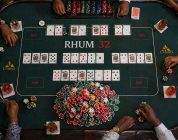
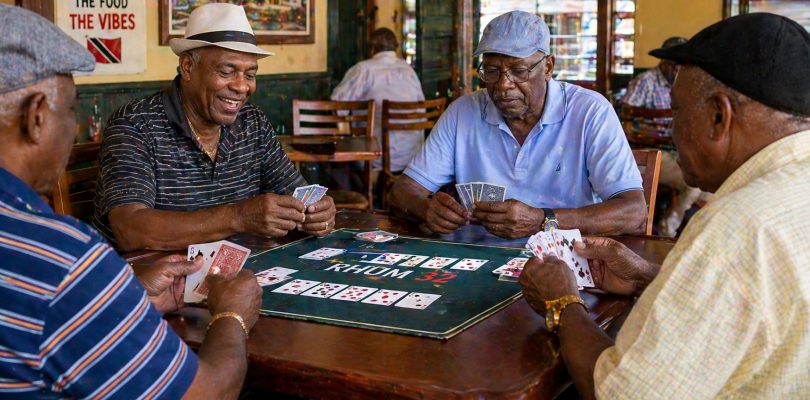
How to Play Rhum 32: A Complete Beginner’s Guide
Trinidad and Tobago’s Unique Casino Game — Explained from Scratch
If you have walked into a casino in Trinidad and Tobago and watched a crowd of people gathered around a card table, cheering when certain cards appear and groaning when others do, there is a good chance you were watching Rhum 32. It is the most distinctively local game on any casino floor in the country — exciting, social, and unlike anything you will find anywhere else in the world.
This guide will walk you through everything you need to know to sit down at a Rhum 32 table with confidence.
What Is Rhum 32?
Rhum 32 is a casino card game that blends the logic of two games most people already know: Rummy and Blackjack. Like Blackjack, you play against the dealer rather than against other players, and your goal is to beat a qualifying threshold. Like Rummy, combinations of cards — sequences and matching sets — can dramatically change the value of your hand.
The name says everything you need to know about the core concept: 32 is the number the dealer must reach or stay under to qualify. If the dealer busts above 32, things get interesting for everyone at the table.
The fundamental goal is simple: have a lower total card value than the dealer.
What You Need to Know Before You Sit Down
The game is played with a standard 52-card deck.
Card values are as follows:
| Card | Value |
| Ace | 1 |
| 2 through 10 | Face value |
| Jack | 10 |
| Queen | 10 |
| King | 10 |
Notice that in Rhum 32, the Ace is worth only 1 — not 11 as in Blackjack. This is important because you want low totals. An Ace is always your friend.
You are trying to get the lowest total possible. Unlike Blackjack where 21 is the prize, in Rhum 32 you want as close to zero as possible. The lower your total, the better your payout.
Step One: Place Your Ante
Before any cards are dealt, every player places an ante — your initial bet to participate in the hand. This is your entry ticket. The size of the ante is up to you within the table’s posted minimum and maximum limits.
Once all antes are placed, the dealer begins.
Step Two: The Deal
The dealer gives every player and themselves four cards. Here is the critical detail: the dealer’s last (fourth) card is dealt face up for everyone to see.
So after the deal:
- You have four cards — all face down, for your eyes only
- The dealer has four cards — three face down, one face up
That single visible dealer card is your window into the dealer’s hand. It is the most important piece of information you will receive before making your decision.
Take a moment to evaluate your hand:
- Add up your four card values
- Look for any combinations (more on those in a moment)
- Look at the dealer’s face-up card and think about what it might mean for their total
Step Three: The Spread — The Most Important Concept in the Game
Before you make your decision, you need to understand the spread. This is what makes Rhum 32 unique.
A spread is a combination of three or more cards that cancels to zero.
There are two types of spread:
- Three or more cards of the same rank For example: three Sevens, or four Tens. It does not matter what suits they are.
- Three or more cards in sequence of the same suit (a running flush) For example: the 7, 8, and 9 of Spades. Or the 3, 4, 5, and 6 of Hearts.
When you have a spread in your hand, those cards count as zero points, regardless of what their individual values would otherwise be.
Why this matters enormously: A hand with three Kings would normally total 30 points — very bad. But three Kings form a spread, so they count as zero. Your total is now only whatever your remaining card is worth. A hand that looks terrible can become extraordinary with a spread.
The best possible hand is a complete spread across all five cards — a total of zero points. This pays 50 to 1. It is the royal flush of Rhum 32.
Step Four: Your Decision — Play or Surrender
After looking at your four cards and assessing your position, you face the key decision of the hand.
Option 1 — Play: You believe your hand can compete. You place a bet equal to your ante (so you are now committed to double your original stake). You are staying in.
Option 2 — Surrender: You do not like your hand. You fold and forfeit your ante. You lose the ante but nothing more. The hand is over for you.
How to think about this decision:
A low total is good. A total under 17 points puts you in a range where payouts start to become meaningful. A total under 12 points is strong. A spread in your hand — even a partial one that reduces your total significantly — is usually a clear reason to play.
A high total with no spread potential and a strong dealer face-up card (a low card, because remember, the dealer wants to be low too) is usually a reason to surrender.
Remember: you have only seen four of your five cards at this point. The fifth card — dealt to everyone after the decision — could improve or hurt your hand. Staying in is a bet on your current position plus the possibilities ahead.
Step Five: The Fifth Card
Once all players have made their decisions, the dealer gives one more card to every player who is still in, and deals one more card to themselves as well.
Now everyone has five cards. Turn them over. Add up your total — accounting for any spreads.
Step Six: The Dealer Qualifies (or Doesn’t)
The dealer reveals their full hand and calculates their total.
The dealer must have a total of 32 or less to qualify.
- If the dealer qualifies (32 or under): The dealer compares their total to each player’s total. If your total is lower than the dealer’s, you win. If the dealer’s total is lower than yours, you lose.
- If the dealer does not qualify (over 32): Your ante is paid out, but your bet pushes — meaning you get it back but it does not win.
The Pay Table: Why Lower Is So Much Better
This is where Rhum 32 separates itself from simpler casino games. You are not just trying to win — you are trying to win by how much. The lower your hand total, the bigger your payout.
| Your Hand Total | Payout on Your Bet |
| 0 points | 50 to 1 |
| 1 – 3 points | 20 to 1 |
| 4 – 7 points | 4 to 1 |
| 8 – 11 points | 3 to 1 |
| 12 – 17 points | 2 to 1 |
| Over 17 points | 1 to 1 (even money) |
Your ante is always paid at 1 to 1 when you win, regardless of your hand total. The tiered payouts apply to your bet — the second wager you placed when you chose to play.
Example: You place a $10 ante and a $10 bet. Your final hand totals 5 points. The dealer qualifies with 24 points — higher than yours. You win:
- $10 on your ante (paid 1 to 1)
- $40 on your bet (paid 4 to 1 for a 4–7 point hand)
- Total win: $50 on a $20 investment
Example: Same hand, but your total is 2 points. You win:
- $10 on your ante
- $200 on your bet (paid 20 to 1 for a 1–3 point hand)
- Total win: $210 on a $20 investment
That is the thrill of Rhum 32. A spread-assisted hand can turn a small bet into a very significant return.
The Insurance Bet — Optional Side Action
Most Rhum 32 tables offer an insurance bet as an optional side wager, placed separately from your ante before the deal. It is typically a fixed amount (commonly $5) and pays according to its own schedule based entirely on your final hand total — independent of whether you beat the dealer or not.
| Your Final Hand | Insurance Payout |
| 0 points | $5,000 |
| 1 – 3 points | $500 |
| 4 – 7 points | $250 |
| 8 – 11 points | $125 |
There is also a $10 insurance that pays $300 if the hand ends in a tie, and — the legendary payout — $10,000 for hitting Ace through 5 of the same suit: the ultimate spread in Rhum 32.
The insurance bet attracts a loyal community of players who place it every single hand, knowing that most of the time they will lose a small amount, but that one extraordinary hand can pay thousands. It is entirely optional and does not affect the main game in any way.
Special Payouts to Know
47 or 48 points with insurance: If you hold a 47 or 48-point hand — essentially four ten-value cards — and have placed the insurance bet, this pays 2 to 1 and 3 to 1 respectively. It is one of the quirks of Rhum 32 that even a very bad hand has a small consolation if you are insured.
Tie: When your total exactly matches the dealer’s total, a tie is declared. Your ante and bet push (returned to you). If you hold the $10 tie insurance, you are paid $300.
A Full Hand, Step by Step
Let us walk through a complete hand to put it all together.
The setup: You place a $20 ante. Optionally, you add $5 insurance.
The deal: You receive the 3 of Hearts, 3 of Diamonds, 3 of Clubs, and King of Spades. The dealer’s face-up card is the 8 of Hearts.
Assess your hand: You have three Threes — that is a spread. The three Threes count as zero. Your total is just the King: 10 points. You are sitting on 10 points with the dealer showing an 8.
Your decision: 10 points is a strong position. The dealer is showing an 8, which means they have at least 8 in their total already. You play and place a $20 bet.
The fifth card: You receive the 2 of Spades. Your total is now 10 + 2 = 12 points. (The three Threes still count as zero.)
The dealer reveals: The dealer has 8, King, 5, 2, and 9. Total: 8 + 10 + 5 + 2 + 9 = 34 points. The dealer does not qualify.
Result: Because the dealer did not qualify, your ante ($20) is paid at 1 to 1 — you win $20. Your bet ($20) pushes — returned to you. Your $5 insurance on a 12-point hand pays $125. Total return: $165 on a $45 stake.
Beginner Tips
Lower is always better. Keep this anchored in your mind throughout the hand. Every card you receive, every spread you spot — you are constantly trying to reduce your total.
Always scan for spreads first. Before you calculate your total, look for three-of-a-kind or three-card suited sequences. Many new players add up their cards and surrender a good hand because they missed a spread that would have brought their total down dramatically.
The dealer’s face-up card tells you something. A low dealer card (Ace, 2, 3) suggests the dealer may be building a low total — be cautious. A high dealer card (King, Queen, Jack — all worth 10) suggests the dealer is already partway to a high total — you can be more aggressive.
Surrender with conviction. If your four-card total is high, you have no spread, and the dealer’s visible card is low, surrendering your ante is the right move. Losing half your stake is far better than losing all of it.
Do not ignore the insurance. You do not need to play insurance every hand, but it is worth understanding what it pays before you dismiss it. On a session where you hit a strong hand, insurance can transform a good win into an exceptional one.
The fifth card changes everything. Remember that neither you nor the dealer has their final hand until that last card is dealt. A hand that looks comfortable can tighten, and a hand that looks risky can resolve beautifully. This is the drama that makes the game.
It is a community game — pay attention to the table. Unlike Roulette, where each player is completely independent, Rhum 32 has a communal element. When players fold, the flow of cards to the dealer changes. Experienced players at the table notice this and factor it into how they feel about the hand. As a beginner, just be aware that your decision affects more than just your own outcome.
A Quick Reference Card
Goal: Have a lower total than the dealer when the dealer qualifies (32 or under).
Card values: Ace = 1, 2–10 = face value, J/Q/K = 10.
Spread = zero points: Three or more of the same rank, or three or more in sequence of the same suit.
Dealer qualifies at: 32 or less.
Key decision: After four cards — play (double your stake) or surrender (lose your ante).
Best possible hand: 0 points — pays 50 to 1.
Insurance: Optional side bet — up to $10,000 for the perfect suited run.
Now Find a Table
Rhum 32 is available at every major casino and gaming club in Trinidad and Tobago. Most casinos welcome new players to watch a few hands before sitting down, and dealers are generally happy to explain the basics before you commit your first ante.
The game rewards patience and attention — it is not loud or frantic in the way some casino games can be. Sit down, watch the dealer, count your spreads, and remember the one rule that governs everything: lower is better.
Welcome to the table.
Rhum 32 is played at casinos throughout Trinidad and Tobago. Always gamble responsibly and only with money you can afford to lose. If gambling is causing you problems, speak to a professional advisor.