From an English Tavern to the Soul of Trinidad and Tobago
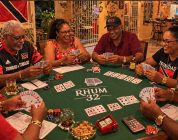
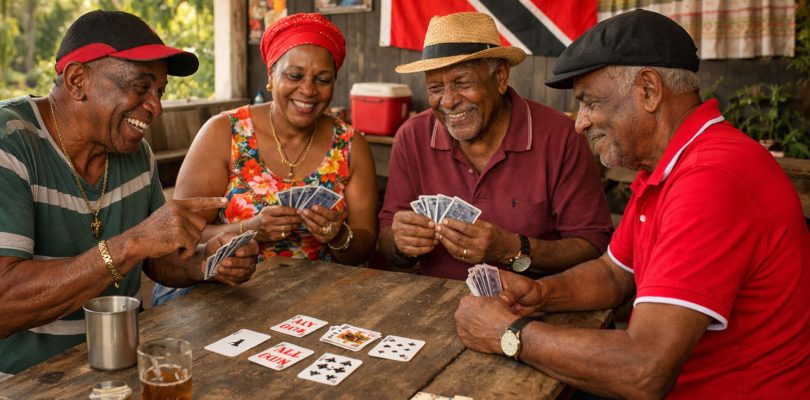
There is a game being played right now in Trinidad and Tobago. It is happening at a table outside a rum shop in Laventille, under a single bulb strung from a nail. It is happening at a community centre in Chaguanas, where a crowd has gathered around four players who have been locked in the same hand for twenty minutes. It is happening in a house in Morvant, where two brothers and their neighbours are deep in argument over whether a Jack was “hung” or not. The game is All Fours — and in Trinidad and Tobago, it is not merely a pastime. It is a national institution.
Born in Kent, Raised in the Caribbean
The story of All Fours begins far from the Caribbean sun. Its first known description appeared in Charles Cotton’s Compleat Gamester of 1674, where the game was reported as popular in Kent. Cotton was a poet and sportsman who had a gift for documenting the leisure habits of ordinary English life, and he captured All Fours at a moment when card games were the entertainment of taverns, coaching inns, and the homes of working people across England.
The game is probably of Dutch ancestry, and it played a curious role in card history: it is the game that gave the name jack to the card that was originally known only as the knave. That linguistic legacy alone would be enough to earn All Fours a footnote in history. But the game had bigger ambitions.
All Fours was an English tavern trick-taking game that was popular as a gambling game until the end of the 19th century — the eponymous and earliest recorded game in a family that flourished most in 19th-century North America, with notable members including Auction Pitch, Pedro, and Cinch, which competed against Poker and Euchre for the hearts of American card players.
The game crossed the Atlantic on colonial ships and plantation ledgers. By no later than the 1800s, the game had been taken to America, where it became popular among African Americans on slave plantations — also called Seven Up, it gave rise to variants such as Pitch and Auction Pitch, which probably developed in the New England states. The same currents of colonial movement that carried enslaved people and indentured workers across the ocean also carried their games, their music, and their ways of making life bearable.
How a Colonial Game Became a Caribbean Soul
The precise moment All Fours took root in Trinidad and Tobago is lost to informal history — undocumented in the way that most genuinely popular things are. It arrived not through proclamation but through practice, passed hand to hand across generations in the way of all great games. What we know is that it came with the British colonial presence, and that something remarkable then happened: the colonised took the coloniser’s game and made it entirely their own.
The transformation was deep and deliberate. Trinidad and Tobago developed its own distinct variation — a four-player partnership game played anticlockwise, with the goal of reaching 14 points rather than the standard 7. The scoring system was elaborated with a creativity that spoke to the Trinidadian character: theatrical, strategic, and always alive to the possibility of drama. Instead of scoring just one point for turning up the Jack, the Trinidadian dealer scores one point for turning up the Ace, two points for the Six (or Two in Tobago), and three points for the Jack.
But the most beloved invention was the concept of Hang Jack — a moment of pure theatre that has no real equivalent in English card culture. If the Jack is captured in a trick won by the party that did not originally hold it, that party scores three points for Hang Jack instead of the standard one point for Jack. To “hang” an opponent’s Jack is to steal their most prized card from under their nose — a moment greeted with the kind of noise that wakes up the neighbours.
Tobago Plays It Differently
Even within the twin-island republic, the game has its own internal diversity. The difference between Trinidad and Tobago is small in rules but significant in identity. In Tobago, it is the Two rather than the Six which scores two points when turned up. It is the kind of variation that seems minor to an outsider but carries real meaning within communities — a quiet insistence that Tobago has its own voice, its own way of doing things, even in a shared national game.
The Language of the Game
Part of what makes All Fours so distinctly Trinidadian is the vocabulary that has grown up around it. The game is sometimes known locally as All Foes, a phonetic creolisation that captures how language bends to match the rhythms of local speech. Players “beg” when they are unhappy with the trump suit — a word loaded with strategic meaning, since if the non-dealer begs, the dealer must either allow the non-dealer to score one point and throw in the cards, or run the cards by dealing another three to each player and turning another card for trumps.
To “pitch” is to lead the first card and set the trump. To be “robbed” is to have the Jack taken from you. The table talk that accompanies All Fours — the taunting, the eulogizing of one’s own good fortune, the theatrical despair at a bad deal — is as much a part of the game as the cards themselves. The Trinidadian version is known for its lively, boisterous style, often involving banter, teasing, and social engagement. Silence at an All Fours table would be a strange and suspicious thing.
The Rum Shop as Cathedral
To understand All Fours in Trinidad and Tobago, you have to understand the rum shop. Rum shops are embedded in Caribbean history and culture, first taking shape as English “tippling houses” — characterised by selling alcohol by bottle, nip or shot, without service charges. Traditional rum shops are simple structures, often painted with the colours of a rum or beer sponsor brand, with walls pasted with posters and scribbled notice. At the heart of the rum shop experience, you will nearly always find a card table.
Some shops are mellow places to sit back, relax and sip. Others are known for their pounding music, karaoke, All Fours competitions and Friday-night squabbles. The game thrives in this environment — unhurried, loud, social, and carrying the comfortable weight of routine. For generations of Trinidadian men in particular, the rum shop All Fours session was as regular and as meaningful as church.
The game has never belonged to any particular class or background. It has been played in back yards and in hotel function rooms, by fishermen and by politicians, by teenagers learning from their grandfathers and by elders who have spent sixty years perfecting their “hand”. This democratic quality is part of its power. All Fours asks nothing of you but wit, nerve, and a willingness to get involved.
From the Yard to the Federation
The informal life of All Fours has always coexisted with a more organized competitive tradition. In Trinidad and Tobago, All Fours has a formalized structure, including an All-Fours Federation — the Trinidad and Tobago All Fours Federation (TTAFF) — which hosts organized tournaments and leagues with established rules and scoring. These tournaments attract serious players, cash prizes, and dedicated followings. For the players who compete at this level, All Fours is not a casual distraction — it is a craft practiced with the same discipline one might bring to chess or bridge.
All Fours is played in local bars, at social gatherings, and in tournament settings where cash prizes are common. This competitive atmosphere reflects a local culture that values both skill and community, making All Fours an integral part of Trinidadian life.
A Game That Travels With Its People
Like all genuinely beloved cultural practices, All Fours has followed Trinidadians and Tobagonians wherever they have gone. Trinidad All Fours is also played in other places where there are people with a Trinidadian cultural background — the Manitoba All Fours Association in Canada is one example of the game’s diaspora life.
In Canada, All Fours is popular among Caribbean immigrant communities, particularly in cities like Toronto and Montreal, where large populations of Caribbean descent have kept the game alive as a cultural touchstone, playing it at community centres, festivals, and family gatherings. For many in the Caribbean diaspora, All Fours serves as a connection to their heritage.
Meanwhile, the digital age has given the game new reach. A University of the West Indies computer science student built All Fours Online in 2009 using Java, allowing players across the world to compete in real time. The game became very popular in a short period with virtually no marketing at all. At one point there were over 200 concurrent players online from Canada, the USA, and Trinidad and Tobago. The game has since been rebuilt in HTML5 and is available on mobile. Remarkably, the same game that was being played in Kent pubs in 1674 is today being played on smartphones in Toronto, London, and Port of Spain.
What England Lost, Trinidad Kept
There is a pleasing irony at the heart of this story. In the United Kingdom, where All Fours originated, the game is still played, though it has become more of a historical curiosity than a mainstream game — valued for its nostalgia rather than competitive intensity. All Fours remains popular in parts of northern England, played in West Yorkshire pubs informally and on a league basis but it is a shadow of what it was.
In Trinidad and Tobago, the opposite happened. The game arrived as a colonial import and was returned as something richer, more complex, more alive. It absorbed the character of the islands — the love of spectacle, the pleasure in community, the instinct for turning any gathering into an occasion. The four scoring categories that give the game its name — High, Low, Jack, and Game — became the skeleton of something far larger: a whole social world built around a table, a deck of cards, and the eternal question of who is going to hang whose Jack tonight.
All Fours is a fascinating example of a traditional game that has crossed borders and evolved within different cultural frameworks. It not only provides entertainment but reinforces a shared cultural identity — proving that even a simple deck of cards can carry profound meaning across generations and geographies.
In Trinidad and Tobago, that meaning is not abstract. It sits at the table with you. It argues with you. It slaps the card down and says “Hang Jack!” — and the whole rum shop erupts.
The national card game of the Republic of Trinidad and Tobago, All Fours is played in homes, rum shops, community halls and tournament venues across both islands, and wherever in the world Trinidadians and Tobagonians have made their home.